

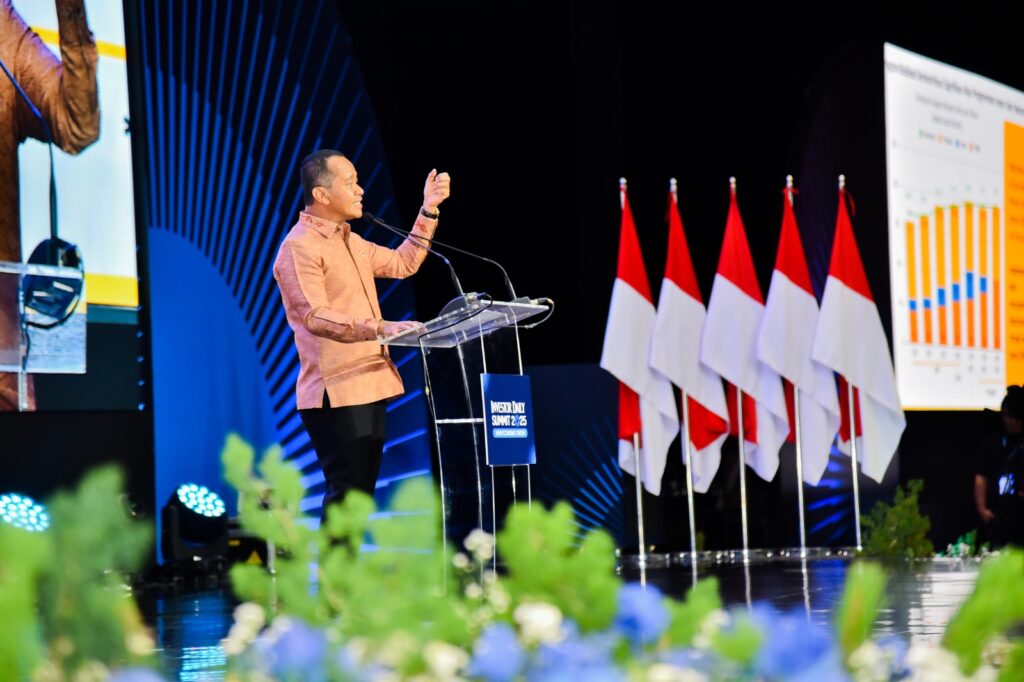
KELASTAMBANG: Indonesia will eliminate diesel fuel imports in 2026 through the mandatory implementation of a 50 percent biodiesel blend (B50), the government announced on Thursday, as part of its strategy to strengthen energy sovereignty and reduce foreign exchange outflows. The decision was confirmed by Energy and Mineral Resources Minister Bahlil Lahadalia during the Investor Daily Summit 2025 in Jakarta.
“Under the directive of the President, it has been decided that in 2026, God willing, we will push for B50, and thus we will no longer import diesel into Indonesia,” Bahlil said on Oct. 9 as quoted by the ministry’s website.
The policy builds on the success of previous biodiesel mandates, with the government citing foreign exchange savings of USD40.71 billion from 2020 to 2025 due to the existing B30 and B40 programs. The transition to B50 is projected to contribute additional annual savings of USD10.84 billion, based on import substitution calculations for diesel fuel.
In 2025, Indonesia is expected to import 4.9 million kiloliters of diesel fuel, equivalent to 10.58 percent of national consumption. By increasing the proportion of Fatty Acid Methyl Ester (FAME) in diesel to 50 percent, the government aims to entirely replace imported diesel with domestically produced biodiesel.
“This is a strategic decision and a form of the state’s alignment with our energy sovereignty. We cannot continue relying on imports that drain foreign exchange and are vulnerable to global price shocks. With B50, we maximise the potential of domestic palm oil, strengthen the farmers’ economy, and most importantly, we ensure that our national energy security is in our own hands. This is a step towards true independence,” said Bahlil.
To support the B50 mandate, Indonesia must raise its FAME production capacity from 15.6 million kiloliters in 2025 to 20.1 million kiloliters in 2026. The Ministry of Energy and Mineral Resources indicated that meeting this production target is critical for the full substitution of imported diesel volumes.
The expansion of FAME production is expected to create a significant employment multiplier effect. According to government estimates, the B50 program will support 2.5 million workers in oil palm plantations and an additional 19,000 in processing facilities.
The policy aligns with the government’s broader energy and economic framework, which was presented under the theme of a “New Economic Order” during the summit. Officials highlighted the shift as a demonstration of Indonesia’s resolve to transform its commodity base into an integrated pillar of national resilience.
“This is real execution of bold policy, not merely exploration of potential. We are turning our energy and commodity resources into tangible economic strength, creating stability, and building the foundation for a better and self-reliant Indonesia,” Bahlil said.
The implementation of the B50 mandate also reflects Indonesia’s ongoing efforts to diversify its energy mix while reinforcing regulatory support for downstream industries. The government has continued to develop frameworks to ensure feedstock availability, investment in processing infrastructure, and compliance with fuel quality standards.