

The Indonesia Energy & Engineering (IEE) Series 2025 exhibition highlighted the critical role of EV charging infrastructure, data sovereignty, and heavy-duty electric vehicles in accelerating Indonesia’s industrial transformation, according to presentations and exhibitions held at JIExpo Kemayoran from Sept. 17 to 20.
On the third day of the event, Pamerindo Indonesia, the organizer of Mining Indonesia and its affiliated shows, emphasized how infrastructure for electric vehicle (EV) charging remains a pivotal factor in deploying electric mining and logistics equipment in the country.
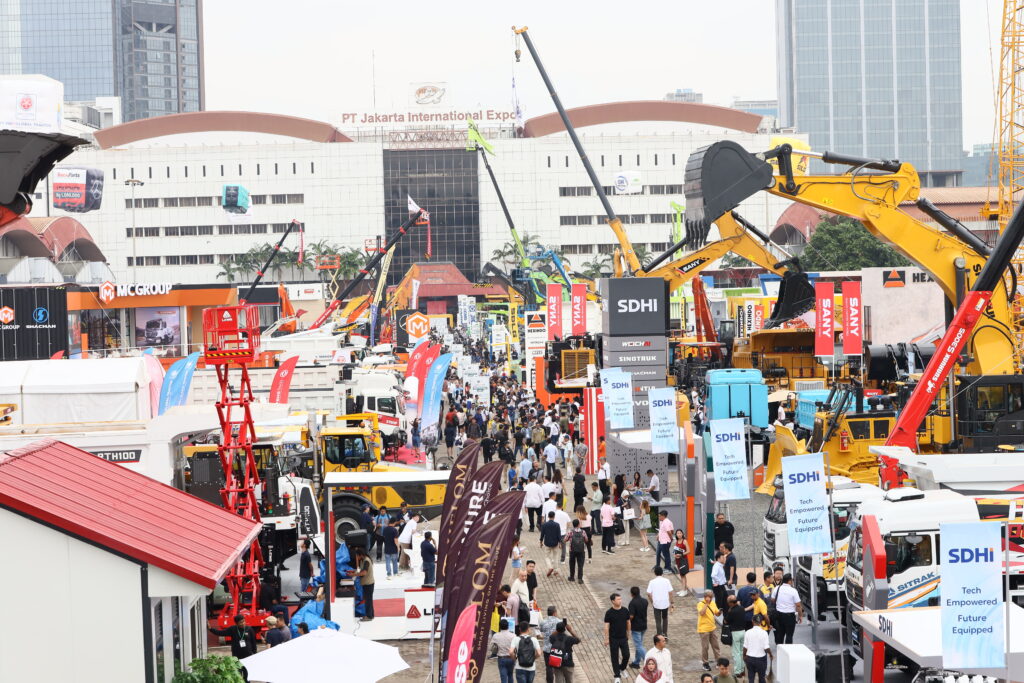
A representative from Chinese heavy machinery manufacturer SANY stated that the successful introduction of its EV trucks in Indonesia since last year depended on adequate charging support systems.
SANY showcased its SE425 electric truck with a 425 kWh battery capacity, SYZ212C EV dump truck, and SW 956E electric wheel loader at Mining Indonesia 2025.
“Electric units can show immediate cost savings due to significantly lower electricity expenses compared to diesel fuel,” the SANY representative said as quoted by Press release issued by Pamerindo Indonesia, pointing to diesel prices that range between Rp 10,000 and Rp 20,000 per liter versus tens of thousands of rupiah for a full day’s EV charge using grid power.
Indo Global Tractor also introduced the Dongfeng Dump Truck EV 8×4 as its second electric model in Indonesia, following earlier trials of its Tractor Head EV at Terminal Petikemas Surabaya. The truck reportedly offers 30–45 percent energy savings and requires fewer spare parts, reducing waste while supporting the country’s carbon neutrality goals.
Hexindo presented its new Hitachi ZX550LC-7G and ZX350LC-7G excavators, tailored for Indonesia’s rugged operational environment. These models, developed by Hitachi Construction Machinery (HCM) Japan, are equipped with large, durable buckets, the latest 7G engine generation, and remote monitoring via Hitachi ConSite telematics.
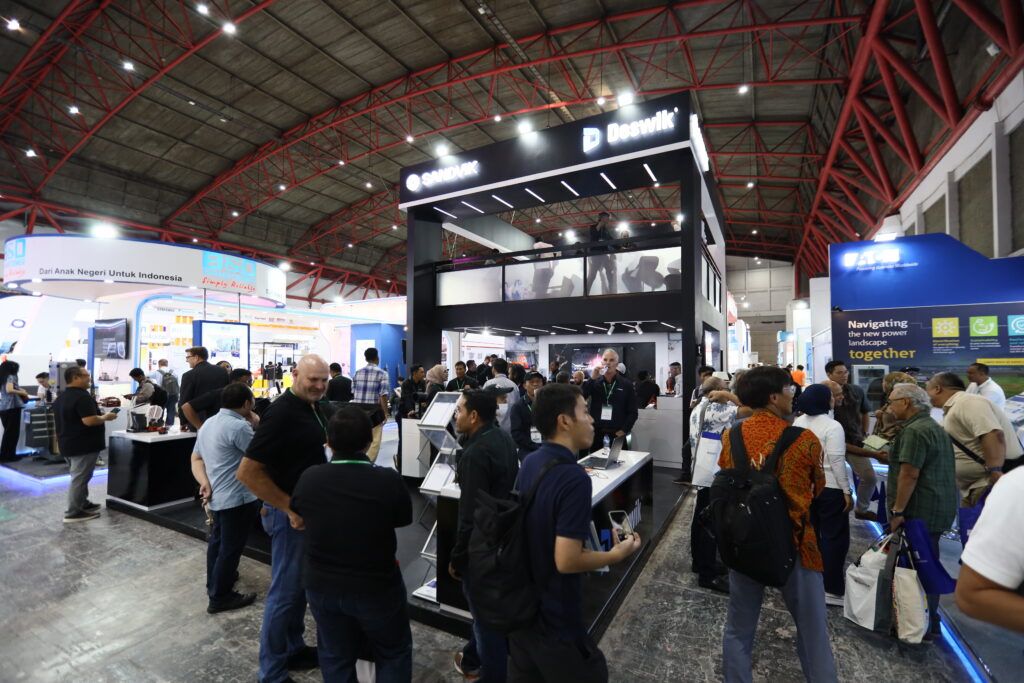
The critical need for EV infrastructure was reiterated in a seminar titled “Unlocking Indonesia’s E-Mobility Infrastructure: A Strategic Opportunity for Sustainable Transport”, hosted by the Indonesian Smart Grid Initiative (PJCI). A representative from the Indonesian Electric Vehicle Industry Association (Periklindo) stated, “Mass EV adoption hinges on public trust in accessible, fast, and ultra-fast charging infrastructure.”
Periklindo’s Prabowo K. cited China’s network of over 2.5 million public charging stations and Europe’s IONITY initiative with more than 4,800 ultra-fast charging points across 24 countries as benchmarks. Indonesia, he said, is targeting 63,000 public charging stations (SPKLU) by 2030 under Presidential Regulation No. 79/2023, which mandates the Energy and Mineral Resources Ministry (ESDM) to ensure electricity provision for EVs.
Representatives from the National Research and Innovation Agency (BRIN) highlighted the importance of smart charging and the integration of Open Charge Point Protocol (OCPP) and Open Smart Charging Protocol (OSCP) for broader grid connectivity.
Electric & Power Indonesia 2025, part of the IEE Series, featured solutions for power accessibility, including communal solar power systems (PLTS) from Swadaya Surya and modular EV charging stations by B&D Transformer. “Smart grid solutions integrated with EMS and SCADA offer real-time monitoring and improved efficiency without the need for on-site operators,” a Swadaya Surya exhibitor stated.
Kaltimex introduced its MWM gas genset capable of running on biogas and landfill gas. The unit reportedly offers high efficiency, reduced methane emissions, and longer operational hours with lower costs, contributing to energy transition goals.
Beyond heavy equipment, exhibitors also addressed field mobility needs. RMA showcased its Ford Ranger 4×4 and Mahindra Scorpio 4×4, tailored for mining operations. Visitors at RMA’s booth could test-drive these models, which have been customized for the Indonesian mining sector.
Meanwhile, the inaugural Data Center Asia – Indonesia 2025, held on Sept. 17–18, focused on strengthening national data resilience. With more than 212 million internet users in the country, discussions emphasized the importance of local data sovereignty and energy efficiency in data centers.
“Digital resilience is not just about secure data centers. What matters more is ensuring our data stays under our control,” said Prof. Eko K. Budiardjo from the University of Indonesia during a seminar on building reliable national data centers.
Speakers aligned the data sovereignty theme with the government’s National Data Center (PDN) development program, which aims to consolidate scattered data facilities into a secure and globally compliant system to support Indonesia’s digital transformation.